
PittAI PathConnect Speakers
SESSION 1

Dr. Liron Pantanowitz is Chair and Professor of Pathology at the University of Pittsburgh. Trained at Harvard and Tufts, he is board-certified in clinical informatics and holds an MHA from Ohio University. Editor-in-Chief of the Journal of Pathology Informatics, he is a past president of multiple pathology associations. Widely published, his research focuses on digital pathology, artificial intelligence, and non-gynecologic cytopathology.

Dr. Rashidi, Associate Dean of AI in Medicine and Professor at the University of Pittsburgh, integrates bioinformatics, machine learning, and pathology to advance clinical care, research, and education. As Executive Director of CPACE at UPMC, he developed major AI platforms such as MILO, STNG, and Pitt-GPT+. A hematopathologist and educator, he previously led AI initiatives at Cleveland Clinic and UC Davis and is internationally recognized for his innovations in computational pathology.

Dr. Faisal Mahmood is an Associate Professor at Harvard Medical School and the Division of Computational Pathology at Brigham and Women’s Hospital and Massachusetts General Hospital. Affiliated with Dana-Farber, the Broad Institute, and Harvard BIG, his lab develops AI algorithms for disease diagnosis, prognosis, and therapy prediction. He has created widely used computational pathology methods, with research published in leading scientific journals.

Dr. Darshana Jhala is Professor of Clinical Pathology and Laboratory Medicine at the University of Pennsylvania and Associate Chief of Staff for Pathology at the CMC VA Medical Center. A national leader in telepathology, she helped develop standards for whole slide imaging and proficiency testing. Widely respected for her research and leadership, she has over 350 publications in EUS-FNA, EBUS-FNA, COVID-19, telepathology, and molecular testing.

Dr. Qihui “Jim” Zhai, MD, FCAP, is Professor and Chair of Pathology at LSU Health Shreveport, where he also serves as Pathologist-in-Chief and holds the Albert G. and Harriet G. Smith Endowed Chair. With broad leadership across academia and pathology organizations, he is recognized for his collaborative vision and dedication. Dr. Zhai was elected President of the College of American Pathologists (CAP) for 2025–2027.

Dr. Rajiv Dhir, Executive Vice-Chair of Anatomic Pathology and Professor at UPMC, is a leader in computational pathology and AI. Trained at AIIMS and UPMC with an MBA from the University of Pittsburgh, he has advanced digital pathology integration and workflow optimization. His research focuses on AI-assisted diagnostics for urologic cancers, and he provides key guidance on academic-industry partnerships and technology implementation in pathology.

Rep. Roman Kozak represents Pennsylvania’s 14th District, emphasizing respect, transparency, accountability, and integrity. Grandson of WWII Nazi labor camp survivors, he values freedom, faith, and opportunity. A Geneva College graduate, he advocates for lower taxes, reduced regulations, expanded education, and support for first responders and farmers. With experience in trucking, legislative work, teaching, and small business ownership, he brings diverse expertise to his first term in office.

Rep. Arvind Venkat, an emergency physician, was elected in 2022 to represent Pennsylvania’s 30th District, becoming the first Indian American and first physician in nearly 60 years in the state House. A Harvard and Yale graduate, he advocates for accessible healthcare, reproductive rights, gun violence prevention, first responders, and workforce development. He has served on EMS boards and currently lives in McCandless with his wife and three children.

M.E. de Baca, MD, FCAP, is Vice President of Medical Affairs at Sysmex America. Trained in Argentina, Germany, and the U.S., she completed residencies in ophthalmology and pathology with a hematopathology fellowship. An active CAP leader, she serves on the Board of Governors and chairs the Council on Informatics and Pathology Innovation. She is a past president of the Association for Pathology Informatics and former member of CLIAC.

Dr. Ronald K. Poropatich, MD, MS, is Director of the Center for Military Medicine Research and Professor of Medicine at the University of Pittsburgh. A retired U.S. Army Colonel and Pulmonary/Critical Care physician, he has over 30 years of military and academic service. An expert in telemedicine, autonomous care, and critical care, he has over 80 publications and is a Fellow of multiple national medical and telemedicine organizations.
SESSION 2

Dr. Matthew G. Hanna is Vice Chair of Pathology Informatics at UPMC and Director of AI Operations at CPACE. Trained at MSKCC, UPMC, and Mount Sinai, he specializes in digital and computational pathology. He serves as Treasurer of the Digital Pathology Association, chairs CAP’s Artificial Intelligence Committee, and contributes to the Council on Informatics and Pathology Innovation. His clinical interests include breast pathology, AI, image analysis, and decision support tools.
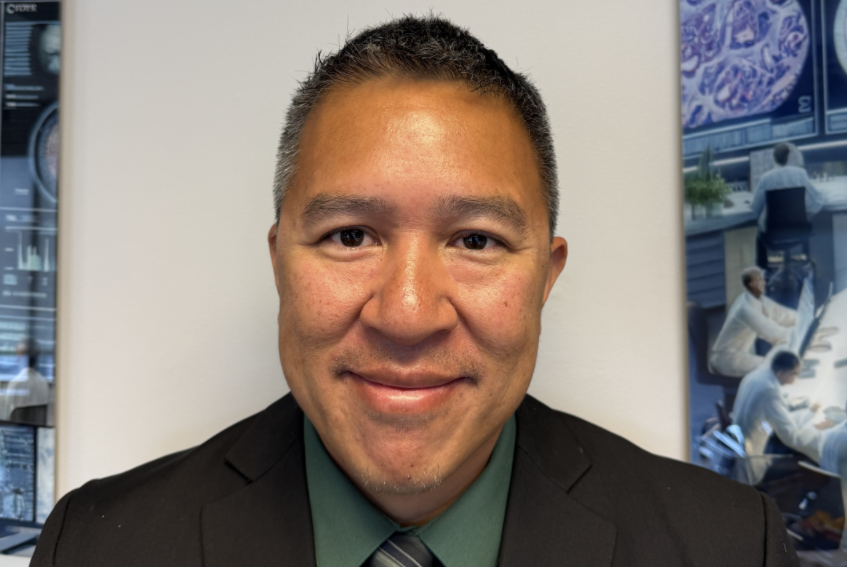
Dr. Nam Tran is Professor and Associate Dean for Biobanking at the University of Pittsburgh School of Medicine, Vice Chair for Biobanking, and Medical Director for Point-of-Care Testing at UPMC. He also serves as Senior Technical Director for AI Technologies at CPACE. Formerly at UC Davis, he co-founded the Center for Diagnostic Innovation. His work integrates laboratory medicine and AI, and he holds leadership roles in IFCC, ISBER, and ADLM.

Todd Minnigh is VP of the XMS business unit at Leidos QTC, driving innovations in medical imaging. Previously, he was Chief Marketing and Commercial Officer for GE Healthcare’s Global X-Ray unit, leading the launch of the first AI-enabled imaging device and overseeing portfolio rebranding. He spent 16 years in executive roles at Kodak and Carestream Health, managing sales, service, and marketing across CR, DR, PACS, RIS, VNA, printers, and film products.

ChatGPT said: Dr. Sarah Harrington is Director of Medical Scientific Affairs at Hologic, leading global data strategies in AI-enabled cervical cancer screening and digital cytology. With over 15 years of experience across R&D, marketing, and clinical innovation, she has contributed to multiple publications validating AI-assisted cytology. She holds a Ph.D. from the University of Wales, a postdoctoral fellowship from the University of Toronto, and an MBA from MIT Sloan.

Mark Frushone is Global Director of Commercial Development for Digital Pathology at Leica Biosystems. With over 25 years in healthcare and 16 years in digital pathology, he joined Leica in 2012 to advance global digital pathology initiatives. Previously, he was Senior Application Specialist at Aperio Inc. He holds a Master’s in Education from National University and a Bachelor of Science from Central Connecticut.

Okan Ekinci is Head of Digital Technology and Chief Medical Information Officer at Roche Information Solutions, providing digital health solutions for laboratories, clinicians, and patients. A cardiologist by training, he previously served as CMO and SVP at Roche and held leadership roles at Siemens Healthineers. With expertise across imaging, diagnostics, and pharma, he advises on digital transformation, personalized healthcare, and AI, and is an adjunct professor at University College Dublin.

Dr. Quincy Gu, PhD, is an Assistant Professor at the University of Pittsburgh and Associate Director of R&D at CPACE. He develops interpretable AI frameworks for digital pathology, including deep learning systems that integrate histopathology and molecular data to improve diagnostics. A leader in computational pathology, he co-chairs ASIP’s Digital & Computational Pathology SIG and serves on multiple AI and machine learning committees. His work includes patents and peer-reviewed publications.

Ahmad P. Tafti, PhD, is Assistant Professor of Health Informatics at the University of Pittsburgh and leads the Pitt HexAI Research Lab. He serves as Director of Scientific Affairs at CPACE, hosts the Health and Explainable AI podcast, and is a Fellow of the AMIA. His research applies AI to healthcare informatics and clinical data. He has authored 75+ publications and received awards including the 2021 SIIM Imaging Informatics Innovator Award.

Thomas Pearce, MD, PhD, is Assistant Professor of Pathology at the University of Pittsburgh and UPMC, specializing in diagnostic surgical and autopsy neuropathology. He leads an NIH-funded digital and computational pathology research group and serves as Director of Image Analytics at CPACE. Board-certified in Anatomic Pathology and Neuropathology, he holds a BS in Biomedical Engineering and a PhD in Neurosciences, with over a decade of experience in digital pathology software development.

Dr. Yanshan Wang is Vice Chair of Research and Assistant Professor of Health Informatics at the University of Pittsburgh, and Director of the Generative AI Division at CPACE. His research focuses on developing and applying generative AI, large language models, and clinical NLP to advance healthcare delivery, research, and education.

Dr. Sarah Wheeler is Associate Professor of Pathology at the University of Pittsburgh and Medical Director of Clinical Pathology at UPMC Children’s Hospital. She directs Laboratory Medicine AI at CPACE, focusing on infectious disease serology, rapid diagnostics, viral effects on autoimmunity, machine learning for improved diagnosis, and optimizing serology testing in children with immune dysregulation.
SESSION 3

Mark D. Henderson is Vice Chancellor and CIO at the University of Pittsburgh, leading Pitt Digital’s 390-member team in driving digital transformation across five campuses. With 40+ years in higher education and industry, he oversees AI, analytics, research computing, and digital infrastructure. Henderson serves on multiple boards, contributed to Pittsburgh’s AI Strike Team, and previously held senior IT roles at several universities.

Dr. Suresh R. Mulukutla is VP and Chief Data & Analytics Officer for UPMC Health Services, leading enterprise-wide AI and analytics strategies to improve care and operations. A board-certified interventional cardiologist and Associate Professor at the University of Pittsburgh, he has extensive experience in cardiovascular research, clinical informatics, and integrating EHR data, machine learning, and real-world evidence to advance personalized care and health system performance.

Evan Facher is Vice Chancellor for Innovation and Entrepreneurship and Associate Dean for Commercial Translation at the University of Pittsburgh, advancing faculty and student discoveries and strengthening the regional innovation ecosystem. Formerly President/CEO of SironRX Therapeutics and General Manager at Bayer Healthcare, he has extensive experience in strategy, M&A, and medical devices. He holds a Ph.D. in Human Genetics, an MBA in Entrepreneurship, and a B.S. in Biology.

Uduak S. Ndoh, MBA, is Vice Chancellor and Deputy Chief Information Officer for Health Sciences at the University of Pittsburgh, leading IT strategy for education, research, and clinical initiatives. Since joining Pitt in 2021, he has advanced the “One IT” vision. Formerly Associate Dean and CIO at UNC School of Medicine, he has 20+ years in IT leadership, implementing major clinical and administrative systems. He holds a BS in Chemical Engineering and an MBA.

Dr. Leeanna McKibben, DHA, MSN, RN, CENP, is Vice Chancellor for Health Sciences Administration, Vice Dean for Administration in Pitt’s School of Medicine, and Chief of Staff for Health Sciences, overseeing a $1.7B enterprise with 7,000 faculty and staff. A nationally recognized leader with nearly 30 years of clinical, executive, and academic experience, she drives innovation, equity, and operational transformation, doubling research funding and advancing strategic initiatives across health scie

Dr. Anantha Shekhar is Senior Vice Chancellor for Health Sciences and Dean of the School of Medicine at the University of Pittsburgh. An internationally recognized educator, neuroscientist, and entrepreneur, he has made significant contributions to medicine and life sciences. Before joining Pitt in 2020, he spent over 35 years at Indiana University School of Medicine, serving in leadership roles including founder of the statewide Clinical and Translational Science Institute.